
⭐ Key Takeaways
- A clear and simple resume helps U.S. employers understand your skills fast.
- Your portfolio carries more weight than your resume, so show your best work with short project descriptions.
- Use ATS-friendly skills and keywords to help your resume appear in online searches.
- Keep your resume layout clean and link your portfolio at the top for easy access.
- Strong project case studies with clear visuals and short explanations help you stand out in design roles.
Introduction
I want to guide you through the process of building a graphic designer resume and portfolio that employers in the United States understand right away. Many designers feel unsure about how to present their work, how to write about projects, and how to balance creativity with simple formatting.
My goal is to help you create a resume and portfolio that feel clear, strong, and professional.
I keep the language simple so every point is easy to understand and easy to follow.
Michelle
Graphic Designer •Kyle Street
Venango, NE
Email: MichelleCVandyke@gmail.com • Phone: 1308-447-4887
Profile
Creative graphic designer with 5+ years of experience crafting brand identities, digital assets, and marketing collateral. Skilled in Adobe Creative Cloud, typography, layout, and visual storytelling. Strong portfolio spanning web, social media, print campaigns, and UI elements for modern brands.
Experience
Senior Graphic Designer – BrightPixel Studio (2020–2024)
Led visual design for brand campaigns, created logos and style guides, designed digital and print assets, and collaborated
with marketing teams. Improved brand consistency and helped increase campaign engagement across social channels.
Graphic Designer – Urban Creative Agency (2017–2020)
Designed brochures, social media graphics, website banners, and event materials. Worked closely with clients to translate
briefs into visual concepts and supported multiple projects simultaneously under tight deadlines.
Education
Bachelor of Design (Graphic Design) – RMIT University (2013–2016)
Diploma in Digital Media – Local TAFE Institute (2011–2013)
Skills
Adobe Photoshop • Adobe Illustrator • InDesign • Figma • Branding & Logo Design • Layout & Typography • Social Media Graphics • Web & UI Assets • Print Design • Concept Development • Visual Storytelling • Portfolio Presentation
Certificates
Adobe Certified Professional – Visual Design (2020) • UX & UI Design Short Course – Online Academy (2019)
function copyResumeDesigner() { const text = “Graphic Designer Portfolio Resumen Graphic Designer • Melbourne, VICn Email: alex.parker.design@gmail.com | Phone: 0412 345 678n n Profile:n Creative graphic designer with 5+ years of experience crafting brand identities, digital assets, and marketing collateral. Skilled in Adobe Creative Cloud, typography, layout, and visual storytelling.n n Experience:n Senior Graphic Designer – BrightPixel Studio (2020–2024)n – Led branding projects, created campaign assets, and improved brand consistency.n Graphic Designer – Urban Creative Agency (2017–2020)n – Designed print and digital materials and collaborated directly with clients.n n Education:n Bachelor of Design (Graphic Design) – RMIT University (2013–2016)n Diploma in Digital Media – Local TAFE Institute (2011–2013)n n Skills:n Adobe Photoshop, Illustrator, InDesign, Figma, Branding, Typography, Web & UI Assets, Social Media Graphicsn n Certificates:n Adobe Certified Professional – Visual Design (2020); UX & UI Design Short Course – Online Academy (2019)”; navigator.clipboard.writeText(text).then(() => { const status = document.getElementById(“copyStatus”); status.style.display = “inline”; setTimeout(() => { status.style.display = “none”; }, 1800); }); }
Why Graphic Designers Need a Resume and a Portfolio
Most design roles in the U.S. require two things:
- A resume that shows your experience and skills.
- A portfolio that proves your design ability with real projects.
Hiring managers skim resumes quickly, but they spend more time on portfolios. They want a resume that gives them a clear picture of your experience. They want a portfolio that shows your design style, your ideas, and your results.
A strong resume helps you get attention.
A strong portfolio helps you get interviews.
Both work together, so it is important to build them in a clean, simple, and structured way.
The Sales Associate Resume Writing Tips That Help You Stand Out to Employers guide shows how interaction skills are presented clearly.
What U.S. Employers Look For in Graphic Designers
Design roles in the United States vary widely. Some designers work in agencies, some in startups, some in corporate creative teams, and others as freelancers. No matter the setting, hiring managers look for the same core signs:
- You can think creatively.
- You can solve visual problems.
- You understand layout, color, and typography.
- You can follow brand style rules.
- You can deliver work on time.
- You can explain your design decisions clearly.
- You can work with clients, teams, or both.
When U.S. employers review resumes, they look for simple statements that show what you did, how you worked, and what outcomes you created.
When they review portfolios, they want to see your process, your thinking, and your final work.
Resume Formats That Work Well in the United States
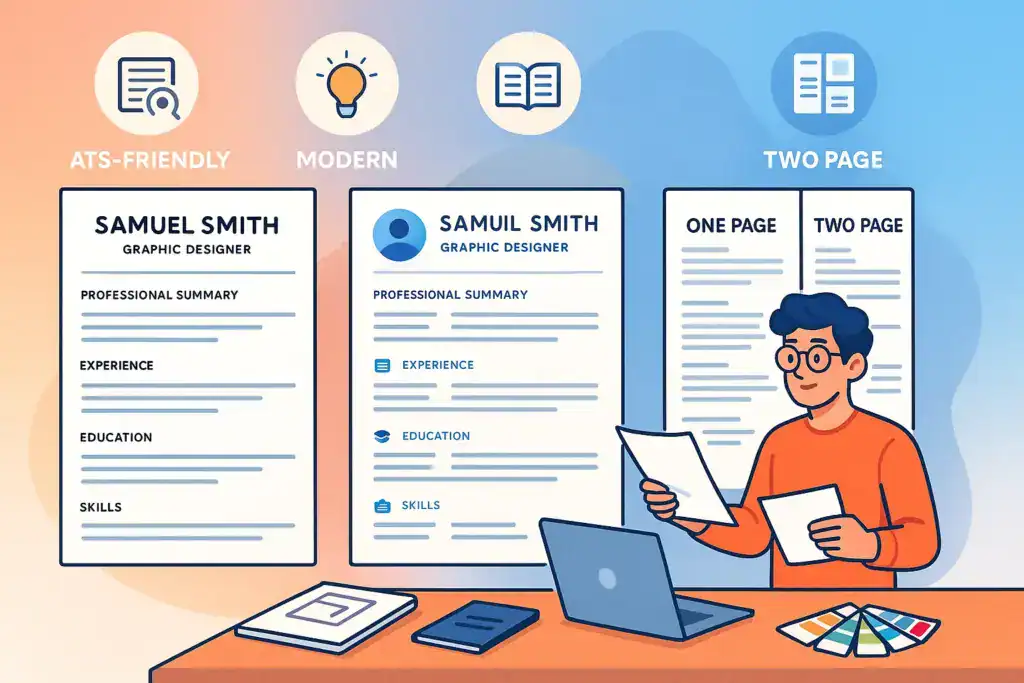
Graphic designers have more room for creativity than many other fields, but your resume still needs to be clean and readable. U.S. employers prefer simple layouts that follow a logical structure. You can add small design elements, but the resume should stay easy to scan.
Clear task descriptions improve portfolio-style resumes. The House Cleaner Job Description For Resume demonstrates responsibility-focused bullet points.
Here are the most common formats:
1. Clean Professional Format (ATS-Friendly)
This layout focuses on text and structure. It is ideal for online job portals where ATS software scans resumes first.
It works well for:
- Corporate design roles
- Marketing and advertising teams
- Agencies with high applicant volume
- Any role submitted through portals like Indeed, LinkedIn, or company ATS systems
A clean format is simple, reliable, and employer-friendly.
2. Modern Creative Format
This style includes light design elements such as:
- Color accents
- Simple icons
- Small layout variations
- Clean typography
This format works well when applying directly to creative directors or hiring managers. It should still be readable and should not hide important information.
3. One-Page vs. Two-Page Resumes
Most graphic designers in the U.S. use a one-page resume, especially:
- Entry-level designers
- Designers with less than 5 years of experience
A two-page resume works well for:
- Senior designers
- Art directors
- Designers with large project histories
- Designers with both freelance and full-time experience
The key is clarity. If you can fit your experience clearly on one page, use one page.
Essential Resume Sections for Graphic Designers
The sections below create a clean layout that fits U.S. standards.
1. Contact Information
This should include:
- Full name
- City and state (no need for full address)
- Phone number
- Professional email
- Portfolio link
- LinkedIn link (optional)
Correct U.S. example:
Emily Carter
Brooklyn, NY
Phone: (646) 880-4421
Email: emilycarterdesign@gmail.com
Portfolio: emilycarterdesign.com
2. Resume Summary
A resume summary helps employers understand your focus and skills fast. Here are three examples you can use as models.
Entry-Level Summary Example
I create clean and modern graphics for web and print. I enjoy layout design, color selection, and strong typography. I work well with teams and learn new tools quickly.
Mid-Level Summary Example
I build brand visuals, social media graphics, and digital assets. I enjoy creating simple designs that support marketing goals. I focus on clear communication and consistent design quality.
Senior-Level Summary Example
I lead visual design projects that help brands grow. I guide designers, plan creative direction, and build strong design systems. I work with cross-functional teams and deliver clear results.
Each summary uses simple language and shows clear skills.
3. Skills Section (ATS-Ready)
Below are skills that match U.S. hiring patterns and ATS keyword trends.
Technical Skills
- Adobe Photoshop
- Adobe Illustrator
- Adobe InDesign
- Figma
- Adobe XD
- Canva
- Typography
- Layout design
- Color theory
- Branding
- Digital illustration
- Wireframes
- Social media graphics
- Print design
Soft Skills
- Communication
- Time management
- Team collaboration
- Creative thinking
- Problem-solving
- Client support
Collaboration and communication support creative success. The Boost Your Career with These Customer Service Resume Tips article explains how to highlight these skills.
Popular U.S. ATS Keywords for Design Roles
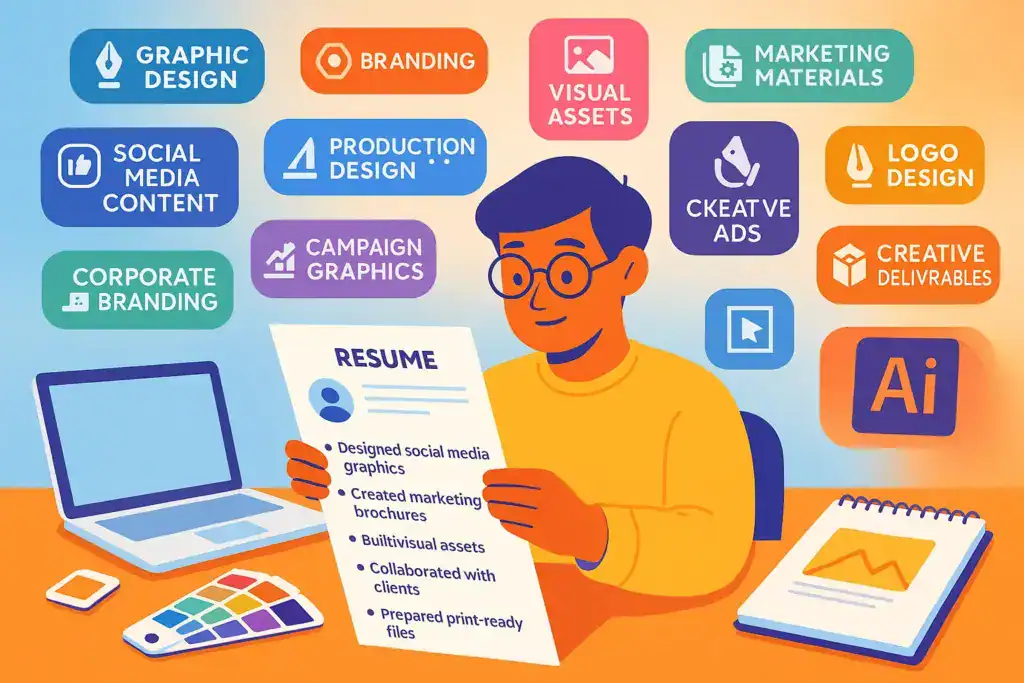
Employers search for these terms:
- Graphic design
- Branding
- Visual assets
- Marketing materials
- Logo design
- UI graphics
- Social media content
- Production design
- Campaign graphics
- Corporate branding
- Digital ads
- Creative deliverables
Include these only if they match your real experience.
Experience Section
Your experience should use short, direct lines that follow this flow:
Action → Result or Purpose
Examples:
- “Create graphics for social media to support marketing campaigns.”
- “Design flyers, brochures, and print materials for local businesses.”
- “Build visual assets for digital ads and website updates.”
- “Work with clients to understand project goals and design needs.”
- “Prepare files for print using correct color and layout standards.”
These lines are clear, simple, and easy to understand.
⭐ Sample U.S. Graphic Designer Resume (Correct Format)
Name: Emily CarterLocation: Brooklyn, NY
Phone: (646) 880-4421
Email: emilycarterdesign@gmail.com
Portfolio: emilycarterdesign.com
LinkedIn: linkedin.com/in/emilycarterdesign
Summary
I create clean and modern graphics for web and print. I enjoy layout work, branding, and digital design. I support teams with simple communication and steady work habits.
Professional communication matters in client-facing creative roles. The Receptionist Resume: Land the Interview Now explains how to present it effectively.
Skills
Technical:
Adobe Photoshop, Adobe Illustrator, Adobe InDesign, Figma, Canva, Typography, Color theory, Digital ads, Social media graphics, Print production
Soft Skills:
Communication, Time management, Creative thinking, Client support, Team collaboration
Experience
Graphic Designer
BrightLine Creative — New York, NY
Jun 2021 – Present
- Design graphics for social media campaigns and digital ads.
- Build brand materials including logos, icons, and style guides.
- Create brochures, flyers, and print assets for client projects.
- Work with marketing team to prepare layout drafts and creative concepts.
- Deliver final files for print and digital formats using standard design tools.
Freelance Graphic Designer
Remote
Jan 2020 – May 2021
- Designed logos, business cards, and social media templates for small businesses.
- Created simple brand kits with colors, type, and visual rules.
- Supported clients by turning ideas into clear visual concepts.
- Delivered files in correct formats for web and print.
Education
Bachelor of Fine Arts in Graphic Design
Pratt Institute — Brooklyn, NY
Graduated 2020
Certifications
Adobe Photoshop Certification
Google UX Design Certificate (optional if relevant)
This resume is simple, direct, and structured for U.S. hiring managers. It includes the right skills, clear experience, and the clean layout that ATS systems can process without issues.
What a Graphic Designer Portfolio Should Include
Your portfolio is the most important part of your creative career. When you apply for design roles in the United States, hiring managers spend more time on your portfolio than any other part of your application. They want to see your style, your ideas, and how you solve visual problems.
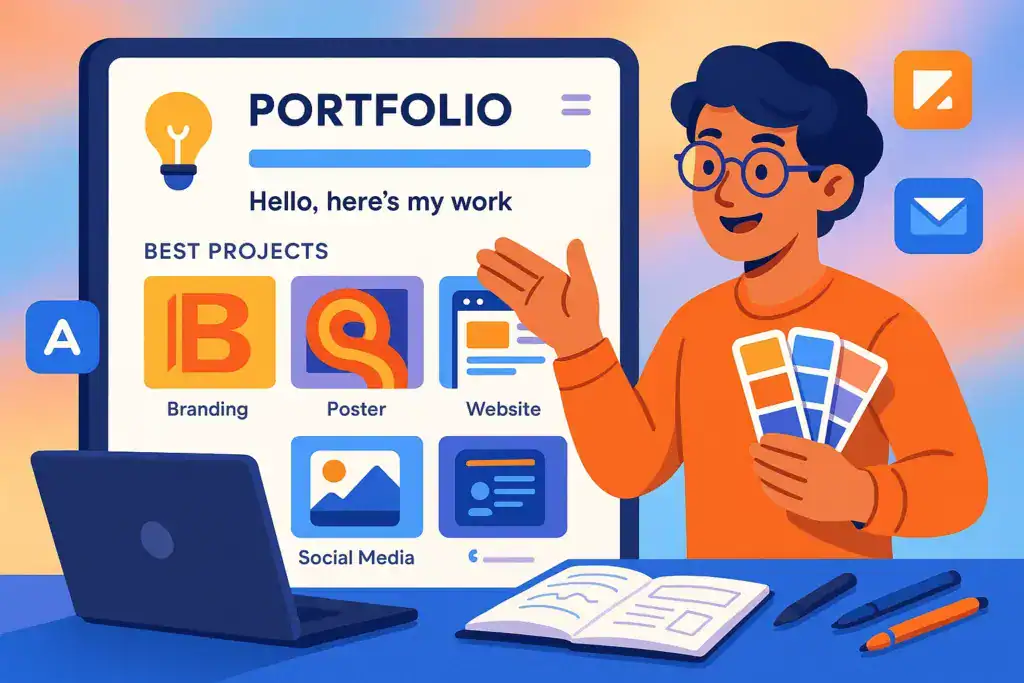
I want to help you create a portfolio that feels simple, strong, and easy to review.
A solid portfolio includes:
- A clean header
- A simple introduction
- Your best projects
- Clear project descriptions
- High-quality visuals
- A way to contact you
Your portfolio should be easy to understand at a glance. The goal is to show strong work without adding clutter.
Ideal Portfolio Structure
Below is a structure that works well for U.S. job applications.
1. Simple Header
Your name
Your role (Graphic Designer, Brand Designer, Visual Designer)
A short tagline
A link to your resume
Contact details
Example:
Emily Carter — Graphic Designer
Clean design for digital and print
New York, NY | Portfolio + Resume | Contact
2. Short Introduction
This is not a full story. It is a short, friendly greeting.
Example:
“I create simple and modern designs that support clear communication. I enjoy brand work, layout design, and digital graphics.”
This style is easy for hiring managers to read.
3. Your Best Work (6–10 Projects)
Choose projects that show:
- Branding
- Typography
- Layout
- Digital graphics
- Social media visuals
- Packaging
- Ads
- UI graphics (if relevant)
Do not add everything you ever made. Show only your best work.
Short Case Studies for Major Projects
Case studies help employers understand your thinking.
Each case study should include:
- Project title
- Your role
- Tools used
- A short problem statement
- A short description of your approach
- Final visuals (before/after if possible)
Keep them simple. Hiring managers do not want long paragraphs.
High-Quality Visuals
Use:
- Clean mockups
- Clear spacing
- Simple backgrounds
- Realistic device frames for digital work
Avoid pixelated images or clutter.
Contact Page
Include a contact form or simple contact details.
Portfolio Examples and Formats
There are several formats graphic designers use in the U.S. I want to show you which ones work best.
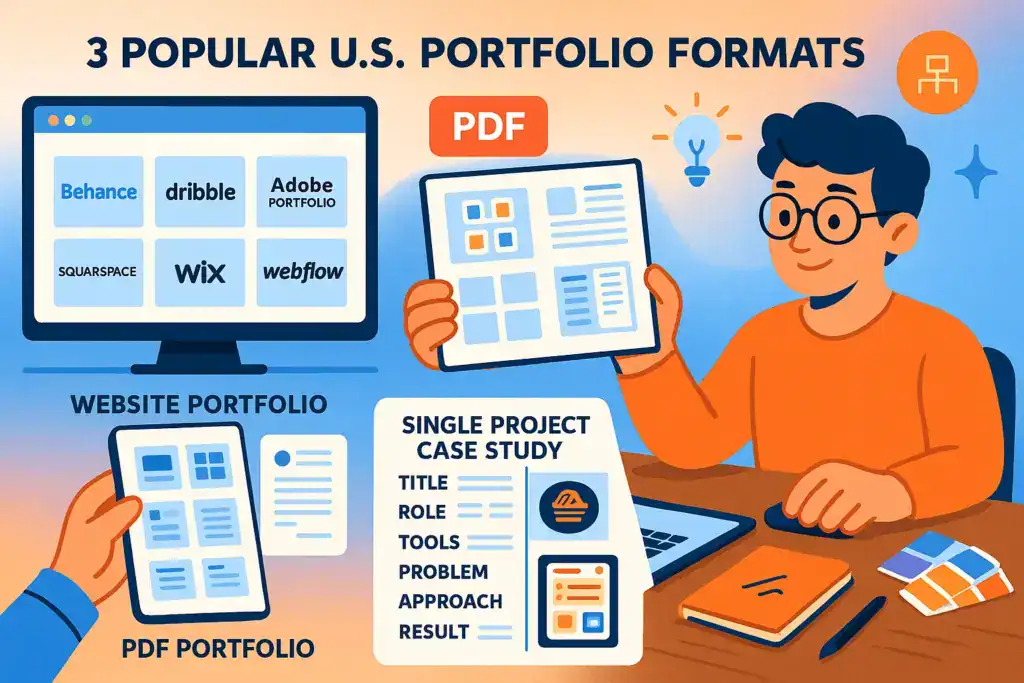
1. Website Portfolio (Most Popular)
Website platforms U.S. designers commonly use:
- Behance
- Dribbble
- Adobe Portfolio
- Squarespace
- Wix
- Webflow
A website portfolio works well because:
- You can link it directly in your resume
- It is easy for hiring managers to view
- You can update it quickly
- It shows personal branding
A website is the best choice for most designers.
2. PDF Portfolio (Good for Print-Focused Designers)
A PDF portfolio works well when:
- A recruiter asks for it
- You apply for a print-heavy role
- You want a small number of polished pages
Tips for PDF formats:
- Keep file under 10–12 MB
- Use 8–12 pages
- Use clean grid layouts
- Add a resume at the end
PDFs should look strong on both phones and computers.
3. Single Project Case Study Format
Agencies want to see the process behind your work. You can follow this short format:
Case Study Template
Title: Restaurant Branding Project
Role: Lead Designer
Tools: Illustrator, Photoshop
Problem:
The client needed a clear brand identity for a new restaurant.
Approach:
I created simple sketches, tested color options, and built the final brand style guide.
Result:
The brand helped the restaurant open with a strong visual identity.
Visuals:
Logo → Color palette → Menu design → Social media graphics
This is the type of clarity U.S. employers appreciate.
How to Write Strong Project Descriptions
Most designers struggle to write about their own work. I want to make this simple for you.
Follow this formula:
Situation → Action → Result
Example:
Brand Identity Project
I worked with a small bakery to create a warm and friendly visual style. I designed their logo, menus, and social media graphics. The final style helped them show a clear identity that customers loved.
Use simple sentences and direct statements. Hiring managers do not want long descriptions.
Another example:
Social Media Campaign
I created a set of clean graphics for a fitness brand. I used bold colors and simple type. The campaign reached more users and supported their new product launch.
These lines show your work without extra words.
Skills U.S. Employers Search for in Graphic Designers
Here are the most common skills U.S. employers include in job posts.
Technical Skills (U.S. Market)
- Adobe Photoshop
- Adobe Illustrator
- Adobe InDesign
- Figma
- Canva
- Adobe XD
- Typography
- Layout design
- Vector illustration
- Color work
- Digital ads
- Social media graphics
- Web graphics
- Icon design
- File preparation for print
These skills show up in most U.S. job descriptions.
Soft Skills
- Communication
- Clear feedback exchange
- Time management
- Teamwork
- Problem-solving
- Ability to follow brand rules
- Client communication
Most Searched U.S. ATS Keywords for Graphic Design
These appear in many online postings:
- Branding
- Visual design
- Graphic assets
- Logo creation
- Design production
- Creative deliverables
- Digital content
- Marketing materials
- Layout production
- Web ads
- Print-ready files
- Photo editing
- Campaign graphics
Using these keywords naturally can help your resume appear in more searches.
Common Resume and Portfolio Mistakes to Avoid
I want to help you avoid mistakes that stop designers from getting interviews.
❌ 1. Over-Designed Resumes
Too many colors or shapes can confuse ATS systems or recruiters.
❌ 2. No Portfolio Link
This is the most common issue.
Always add your portfolio link at the top.
❌ 3. Too Many Projects
10 strong projects look better than 40 average ones.
❌ 4. Long Project Descriptions
Hiring managers do not want essays.
Short and clear always wins.
❌ 5. Irrelevant Work
If the work does not show skill or quality, remove it.
❌ 6. Missing Contact Information
Many designers forget emails or phone numbers on portfolio websites.
❌ 7. No Branding Consistency
Your resume, website, and case studies should feel like they belong to the same designer.
Attention to detail is critical in design work. The Data Entry Resume Examples to Land Your Next Job show how precision is reflected on resumes.
Resume and Portfolio Checklist
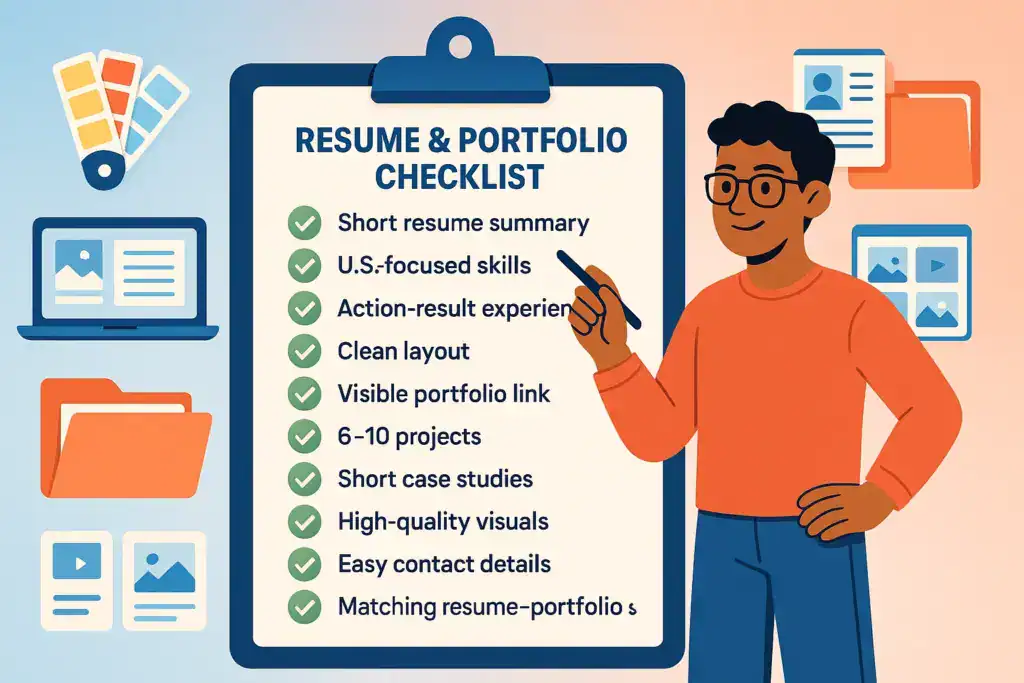
Before you apply for a job, use this checklist:
✔ Resume summary is short and clear
✔ Skills match U.S. employer needs
✔ Experience uses simple action results
✔ Resume layout is clean
✔ Portfolio link is visible
✔ 6–10 projects in portfolio
✔ Case studies are short and clear
✔ Visuals are high-quality
✔ Contact details are easy to find
✔ Resume and portfolio share the same style
This checklist helps you apply with confidence.
Summary
I hope this guide gives you clear steps to build your resume and portfolio as a graphic designer in the United States. When you keep your work simple, clean, and easy to understand, employers notice your strengths faster. Your resume sets the stage, and your portfolio proves your skill. With both in place, you can reach more opportunities and feel ready for the next step in your design career.
FAQs
How many projects should a graphic designer include in the portfolio?
Six to ten strong projects work best. Quality matters more than quantity.
Should I use a one-page resume as a designer?
Yes, unless you have more than five years of experience.
Do U.S. employers accept PDF portfolios?
Yes, but website portfolios are preferred because they are easier to view.
Should my resume match my portfolio style?
Yes. Consistent branding helps employers remember you.
Which software do U.S. employers expect?
Adobe Photoshop, Illustrator, InDesign, Figma, and Adobe XD are the most requested.
Author Information
Anny Kuratulain | Career Development Expert
Anny Kuratulain is a seasoned professional with over 9 years of experience in social media strategy, freelance coaching, and resume optimization. Specializing in helping professionals in various fields, Anny provides expert guidance on crafting resumes that stand out to hiring managers and Applicant Tracking Systems (ATS). Anny’s insights focus on empowering job seekers to highlight their key strengths, tailor resumes to job descriptions, and land the jobs they desire.
